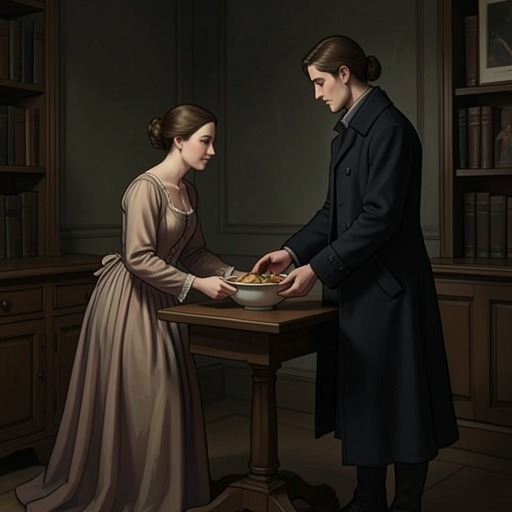
Reunion of Marie-Josèphe and Sherzad in the Caribbean
The Moon and the SunThe reunion of Marie-Josèphe de la Croix and Sherzad in the Caribbean is both an intimate fulfillment of a promise and a public sign that the sea people have entered a new, dangerous phase. After a privateer is pulled beneath the sea, Marie-Josèphe and Lucien de Barenton, Count de Chrétien, reach a small cay and wait through the night. Sherzad returns with her child and a company of sea people. Their songs, gifts, and display of weapons make the meeting at once an affirmation of friendship and evidence that the people who have welcomed Marie-Josèphe are preparing to resist human violence.
Arrival and the Promise
The reunion follows the sinking of the privateer. The master of the Breton ship that brings Marie-Josèphe and Lucien to shore is shaken by what has happened and worries about dangers on the island and in the surrounding waters. Lucien reassures him, while Marie-Josèphe answers the warning about snakes with laughter. The master returns to the ship anchored beyond the cay, leaving the couple alone on the shore until dawn.
Their decision to wait is shaped by Marie-Josèphe’s confidence in a promise Sherzad made: if she survived, she would meet her there at the full moon. Lucien sees the danger differently. He calls the wait madness and points out that the sea people have declared war. Marie-Josèphe does not deny the conflict; she distinguishes herself from its target. Her trust rests on Sherzad’s word, and on the belief that their bond can still cross the boundary between the conflict and the people caught within it.
A breath of song reaches the shore. Marie-Josèphe answers not with a spoken call but with Sherzad’s name-song, the musical form through which the two have established recognition. Sherzad replies. That exchange is the decisive turn of the event: the anticipated meeting becomes a real reunion, and the sea people’s means of communication bridges the distance between land and water. Marie-Josèphe runs into the sea to meet them, while Lucien remains nearby in the shallows.
Sherzad’s Return
Sherzad appears healthy and strong, leading the sea people toward Marie-Josèphe. Her return confirms that she survived the danger surrounding the sinking of the privateer. She is not alone: a baby clings to her, and Sherzad encourages the child to swim toward Marie-Josèphe. Marie-Josèphe lifts and cuddles the child, welcoming a new member of Sherzad’s life into their reunion. The child’s presence gives the meeting a future-facing dimension: Sherzad has returned not merely as a survivor but as a mother with a young life entrusted to her care.
The reunion also restores a relationship that human captivity and violence had put at risk. Marie-Josèphe had insisted that Sherzad might come if she lived; Sherzad’s answer makes that faith tangible. Lucien, initially unsettled by the prospect of meeting the sea people after their declaration of war, stays with Marie-Josèphe. She joins him in the shallows, and he strokes her hair as the child plays nearby. The scene thus holds fear and affection together without making them equivalent: the danger is real, but it has not erased the personal loyalties that draw the characters to the shore.
Gifts, Recognition, and the Sea People
After greeting Marie-Josèphe, Sherzad dives toward a dangerous shoal where many ships have been lost. She resurfaces wearing treasure on her hands and places rings—ruby, diamond, emerald, and pearl—on Marie-Josèphe’s fingers. Her brothers and sisters follow, adorned with jewelry and carrying ivory spears decorated with gold and amber. The weapons overturn Marie-Josèphe’s memory of Sherzad’s earlier stories, in which the sea people did not carry spears. The treasure is therefore not only a gift: beside the armed display, it becomes part of a changed encounter, one that confirms that the sea people have taken up the language and means of war.
The sea people crowd around Marie-Josèphe and sing their gratitude for the return of their sister and their love for her. They place jewels on both her and Lucien, and offer gold, amber, carved jade, and other valuables. The younger members add shells and coins, while Sherzad shares Lucien’s calvados with her brothers and sisters; when the flask comes back, it contains black pearls. The details distinguish this welcome from a single formal payment. The gifts are distributed across the group, mixed with play and shared drink, and explicitly accompanied by songs of affection. The sea people enrich the couple, but the scene presents recognition and belonging as the exchange’s central meaning.
From Courtly Gifts to a Different Bond
Earlier episodes establish how gifts operate around the French court. Lucien gives the galleon’s captain a purse holding a double handful of louis d’or, enough to constitute a fortune for a man of his station. In another encounter, he offers Yves de la Croix a heavier purse in the King’s name. Yves refuses it, explaining that the King has already saved his sister from the war in Martinique and enabled his work; Marie-Josèphe steps between the men and accepts the purse herself. These transactions make money an instrument of royal favor, obligation, and negotiation.
Sherzad’s earlier ransom offer also links treasure to the court’s power: a letter presented by Lucien tells the King that Sherzad offers a great treasure ship. At the royal banquet, months of preparation by the Introducer of Ambassadors and his assistants shape the seating, while the court’s wealth and ceremony fill the Hall of Mirrors. Against that setting, the gifts at the cay carry a different force. They do not come from a monarch dispensing favor or from a captive offering wealth to secure her life. They are a collective welcome from Sherzad’s people to friends who have helped restore her to them. The return of Sherzad, the presence of her child, and the songs around Marie-Josèphe give the meeting its lasting significance: even as the sea people prepare for war, their first gesture toward the two visitors is one of kinship and gratitude.